


Motteram & Sons, a family run biscuit company, was a successful South Australian business operating between 1880 and 1962. The business began as Motteram & Williamson, later became Motteram & Sons, and was eventually acquired by Arnott’s to form Arnott’s-Motteram.
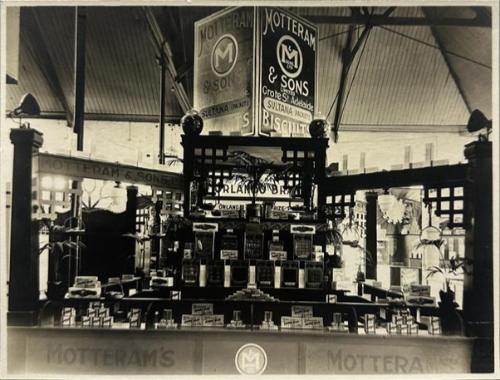
Photo taken of the archive item for the purpose of this story. Likely a display of Motteram & Son’s biscuits at a regional show or the Royal Adelaide Show.
The State Library of South Australia has recently acquired the Records of Motteram Family Biscuits Co. 1897-1964, which include original profit and loss records, stock ledgers, annual reports, price lists and employee contracts. Also included is a handwritten recipe book for the commercial scale production of a few well know biscuit lines that have survived to the present day, providing a tangible link to the lived experience of local entrepreneurship.
Motteram & Sons contributed to the early development of the State’s commercial food industry and played a significant role in shaping the tastes and flavours of the local and national industry.
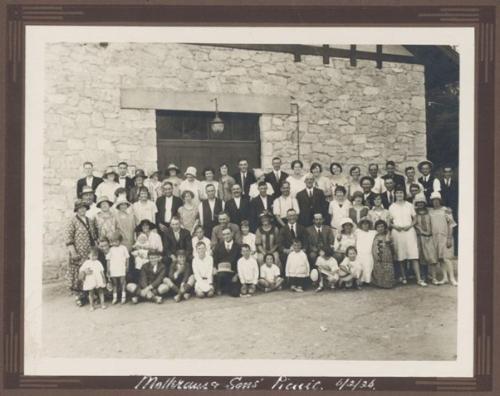
Group photograph of staff and families attending the Motteram & Sons' picnic, 6 February 1926. SLSA: B 70754/46
Where did the Motteram biscuit story begin?
Starting employment as a librarian at the Bendigo Mechanics Institute, Cecil Augustus Motteram felt he had the makings of a baker. By 1873, when about 20 years old, he moved to Adelaide and took employment at the Aerated Bread Company (originally located in the Federation Trading building on Waymouth Street). By 1881 he was the company’s manager. In 1892, Motteram partnered with a fellow Aerated Bread employee, Edward Williamson and, two years later, they took over the business naming it Motteram & Williamson.
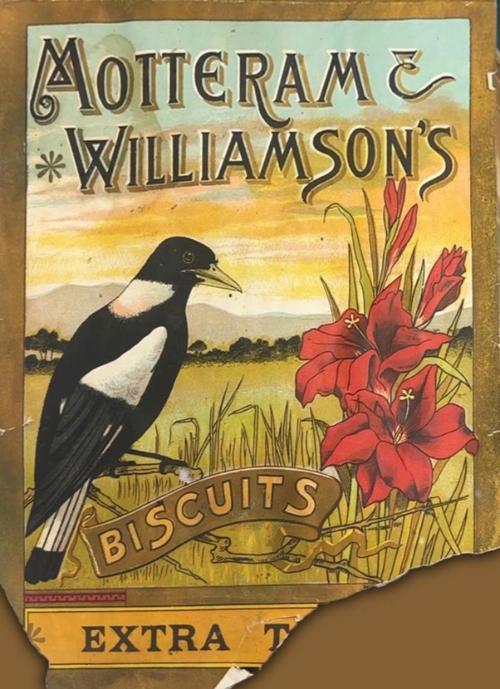
Poster advertising Motteram & Williamson's Biscuits. Photo taken of the archive item for the purpose of this story.
By 1909 Motteram had left the company and opened a new factory in Grote Street near West Terrace calling it Motteram & Sons Ltd.
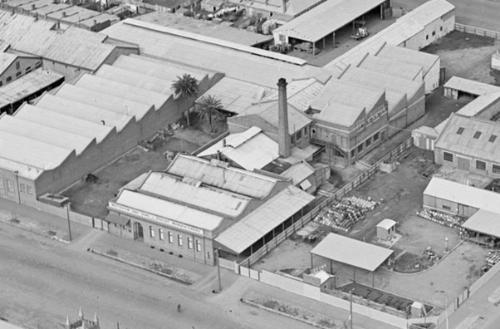
Aerial photograph of Shell fuel storage facility on the corner of Grote Street and West Terrace, Adelaide, looking south-east, 1936. Photographer D.Darian Smith.SLSA: BRG 397/2/43/1
By the 1950s William Arnott Pty Ltd of New South Wales, purchased half the shares in the company and it became known as Arnott’s-Motteram. By 1964, many more buyouts and mergers occurred, including SA based Menz Confectionery, and for a brief moment the company was called Arnott-Motteram-Menz, later becoming the Australian Biscuit Company, which was later renamed Arnott’s Biscuits.
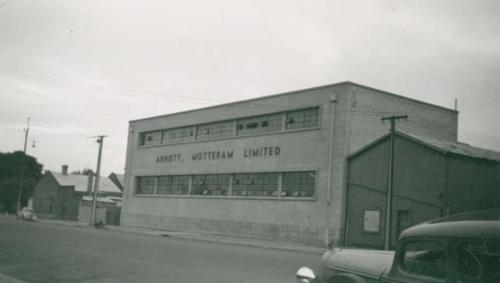
Arnott Motteram and Menz, both South Australian companies were acquired by Arnotts biscuit manufacturer in 1950 and by July 1952 the company was known as Arnott Motteram Ltd. This building was erected in 1952 on the north-side of Gouger Street. SLSA: B 12423
Famous Motteram biccies
The name Motteram fell from use over the passing decades. However many of Motteram biscuits, such as the Arrowroot, Coffee and Bush biscuits, still live on under the Arnott’s brand name. A famous Menz biscuit which is still popular today is the Yo-Yo.
Leafing through the pages of the Motteram handwritten recipe book there are some biscuit names lost to memory: Apricot Creams, Butter Puffs, Atlantic, Cracknells, Carnivals, Chocolate Fingers, Mayfairs, Marie, Nutties, Thin Captain, Victor Wafers and Weston Wafers. The recipes are all in commercial quantities and often use a base biscuit, such as the ‘coffee biscuit’ which was then modified to become, for example, the Bush biscuit.
A special treat for dogs
There’s even a recipe for your beloved pet, simply called ‘Dog biscuits’. The commercial measurements make them a little impractical to make at home, but it is an interesting snapshot about past manufacturing in South Australia.
- 1 Bag Crumbs
- 200 lbs Salisbury Flour
- 140 lbs Bran
- 6 lbs Glucose
- 5 lbs Salt
- 1 lbs Soda
- 2 lbs Ammonia
- 9030 lbs Meat
- 10 Dippers Water (approx.)
Underneath this recipe is another:
- 280 Flour
- 168 Scraps
- 49 Bone meal [sic]
- 14 Fat
- 28 lbs Shredded Meat
- S lbs Salt
- 4 Yeast
- 14 Salt Water
Watch as the State Library of South Australia visits the collection in the archival stacks.
This article was first published by State Library South Australia on 1 October 2025.