


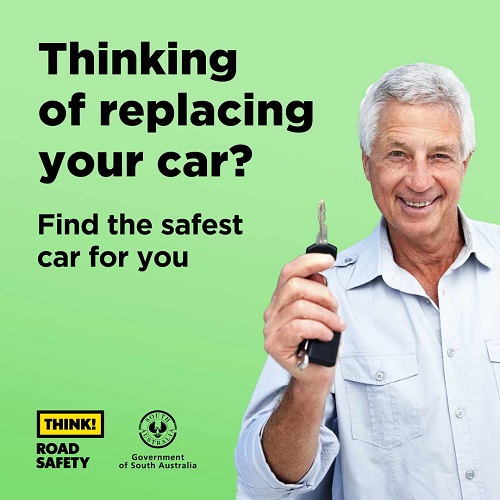
If you are thinking of buying a new car, perhaps for your retirement, make safety a priority and consider buying the safest car in your price range.
Research shows that if we all drove the safest car in its class, the number of lives lost and serious injuries on our roads would reduce dramatically.
Newer cars are generally safer than older ones as they are more likely to feature advanced safety technologies. However, there are plenty of resources available to help drivers choose the safest new or used car within their budget.
Safety ratings
The Australasian New Car Assessment Program (ANCAP) provides star ratings for cars based on their ability to protect occupants and other road users in a crash. Cars with a 5-star ANCAP safety rating are the safest for drivers, passengers and other road users.
Visiting the ANCAP website is a great way to stay informed when purchasing a new or near-new car as it features thousands of safety ratings.
If you are considering buying a car more than 5 years old check the Used Car Safety Ratings and choose a ‘Safer Pick’ car.
A ‘Safer Pick’ car indicates the best choice of car based on protection for the driver, safety of other road users and a lower risk of being involved in a crash.
The more stars the better.
Car safety features
When buying a new car, there are many safety features to consider, including:
- Anti-lock Braking System (ABS) and Electronic Stability Programs (ESP) assist in controlling the car
- Autonomous Emergency Braking (AEB) detects obstacles in front of a vehicle and automatically applies the brakes if an imminent crash is detected
- Lane Keep Assist recognises lane markings and alerts the driver if the vehicle is leaving the lane without indicating
- Blind Spot Monitoring warns a driver that there is a vehicle present in their ‘blind spot’
- Safety Restraint System (SRS) including:
- Airbags – in the event of a crash, front, side, curtain and knee airbags deploy to reduce the risk of driver and passengers hitting the steering wheel, dashboard or side windows of the car and receiving serious or life-threatening injuries
- Seatbelt pre-tensioners – in the event of a crash these tighten the seat belt to help hold the vehicle occupants in their seat reducing their risk of injury
- Reinforced doors with side intrusion bars and crumple zones – absorb impact energy and protect occupants in the event of a crash
- Headrests – minimise the risk of whiplash injuries
- Vehicle size – most larger cars offer better protection than smaller cars but may be difficult to manoeuvre. Consider purchasing the size of car that you are comfortable driving and remember that vehicle size should suit all people who will drive the vehicle
- Colour – light and bright colours are more visible to other road users
- Power steering – less physical effort is needed to turn and control the car
- Visibility – good visibility through all the windows and mirrors is important for safety
- Window tinting – reduces the harshness of full sunlight but tinting may reduce visibility at night
- Window and mirror size – larger size could make a difference to visibility.
Other things to consider are:
- Automatic transmission
- Clear and easy to read instrument panel
- Air conditioning
- Audible alarms for reverse parking, low fuel and seat belt warning
- Adjustable steering column and driver’s seat positions
- Adjustable seat belt height on the door pillar
- Adaptive cruise control
- Fuel type for more efficient engine performance and fuel economy
- Electric mirrors.
For more information
www.thinkroadsafety.sa.gov.au/safecars
Moving Right Along: Obligations and Opportunities for Older Drivers